
By Jude Huck-Reymond
Here you’ll find an easily digestible recap of the impressive Tesla Investor Day happening on March 1st, 2023. We’ll outline the current state of the company, their plans for the future, and the exciting new innovations they will be bringing to market. The primary themes included strong hope and optimism for our future, based on hard physics and mathematical calculations (not nieve expectations). Please comment with any feedback you feel is worth thinking about. Enjoy!
Opening Remarks
- What does it take to convert Earth to a sustainable energy system including generation and consumption?
- What role does Tesla Play in this process?
- How will this effect the company?
Master Plan Part 3
- Tesla sees a clear path towards a sustainable Earth with abundance in many ways
- There will be a white paper released later this month outlining the plan in more detail
- Current energy economy uses >80% fossil fuels and ~2/3 of this is in the form of waste heat or emissions
- Gasoline vehicles convert ~30% of the chemical energy from fuel into vehicular movement, while ~70% is lost to heat and emissions
- Sustainable energy sources require ~%50 of current energy needs due to the lack of wasted energy (no heat loss or emissions)
- A sustainable energy economy will require less material mining than our current petroleum-based economy

In the figure above, we can see Tesla’s goals and parameters including:
- 240 TWh of energy storage
- 30TW of energy generation
- 20M vehicles produced annually (not shown in figure)
- $10 Trillion required capital investment (~10% of 2022 world GDP)
- Requiring <0.2% Earth’s total land surface area (for reference, ~12.5% is used for farmland)
- Zero inhibiting resource requirements
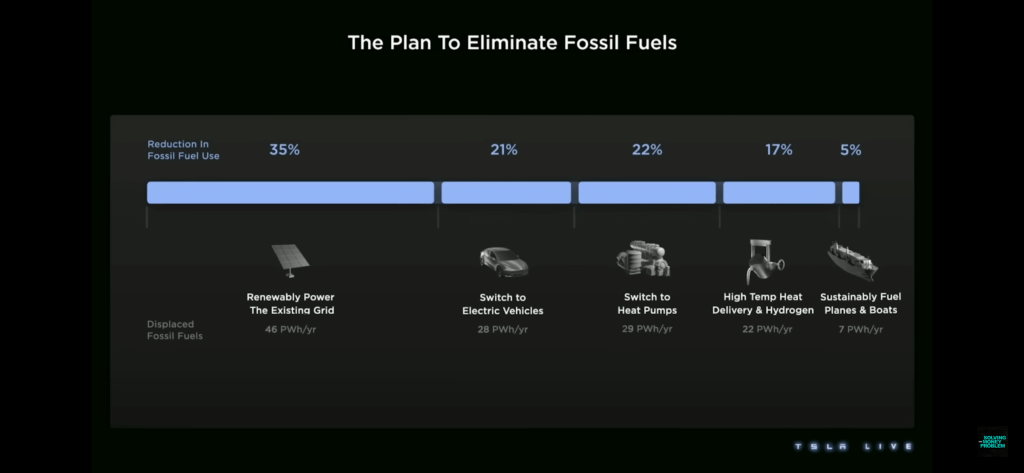
Here is their plan to take over the current fossil fuel economy including:
- ~35% reduction due to renewable power generation
- ~21% reduction due to electric vehicle operation
- ~22% reduction due to electrified heat pumps
- ~17 reduction due to high temp. heat delivery and hydrogen
- ~5% reduction due to sustainable planes and boats
- TOTAL: 100% reduction in fossil fuel usage
Estimated requirements for a transition to electric vehicles:
- 115TWh of battery storage
- 4TWh of Solar and Wind energy production
- ~$7 Trillion in manufacturing investment
Estimated requirements for a transition to electric heat pumps:
- 6TWh of battery storage
- 5TWh of Solar and Wind energy production
- ~$0.3 Trillion in manufacturing investment
Estimated requirements for sustainable plane and boat fuel:
- 44TWh vehicular and stationary battery storage
- 4TWh of Solar and Wind energy production
- ~$0.8 Trillion in manufacturing investment
Operations Innovation
- Cybertruck was designed from material to aesthetic, as opposed to aesthetic to material (material efficiency, not to look pretty)
- 44% operator density improvement (dense factory floors)
- 30% space-time efficiency improvement (less time, less space, more work)
Powertrain Innovation
- ~30% more efficient powertrain than competitors
- Model 3 production improvements (2017-2023): ~20% lighter drive unit, 25% less rare Earth metals, 75% smaller powertrain factory, 65% cheaper powertrain factory
- Next-generation vehicle production plans: 75% less silicon carbide, 50% smaller factory footprint, ~$1,000 total cost, zero rare Earth metal usage
- Main point: more production from smaller spaces will accelerate scaling
Low Voltage Architecture
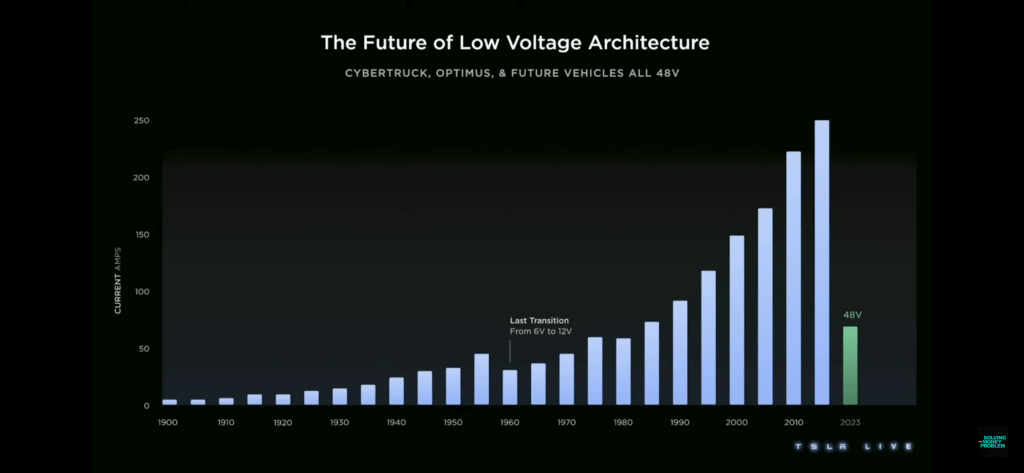
The figure above shows the necessary current for all Tesla products over time. Notice the steep drop in 2023, this will increase efficiency.
Software Innovations
- Successful use of over-the-air software updates since 2012
- Sophisticated data set allows precise innovative insights
- Amazing crash safety based on real-world crash data
- ~123 million miles of data collected every day
- ~1.9 million charging sessions every day
- Existing data will allow optimized next-generation vehicle battery size
- Existing data generates a map of road quality allowing for predictive air suspension
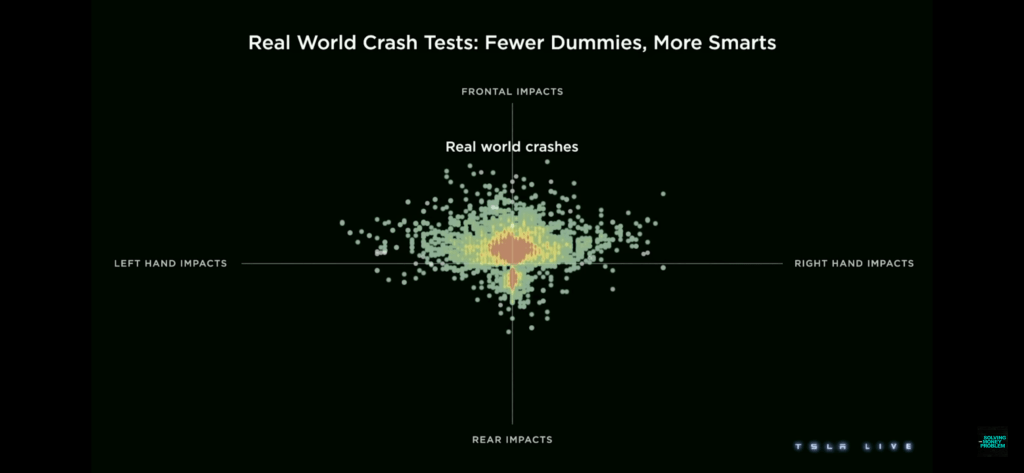
Here we can see the crash data set, allowing for safety innovations
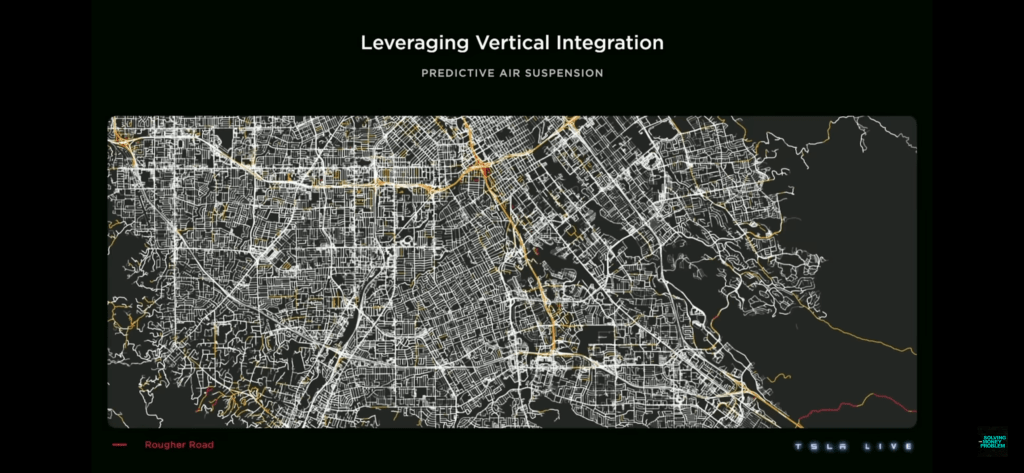
This is a sample map highlighting rough road conditions
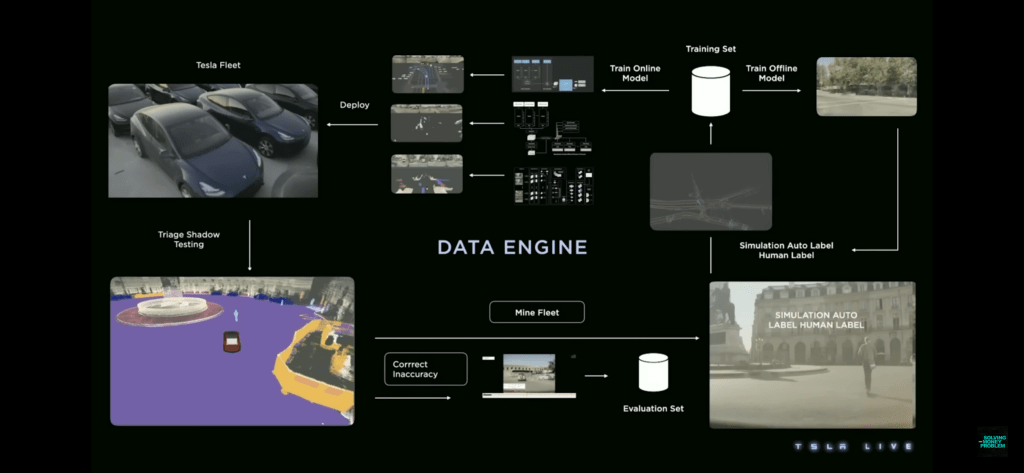
Here we have a chart simplifying the software dynamics
Full Self Driving (FSD) Innovations
- Autonomy is essential because of immense opportunity in product utilization rate
- Tesla can “mine” the fleet for specific date to find solutions to uncommon problems
- ~400k customers currently utilize FSD Beta version
Optimus Bot Innovations
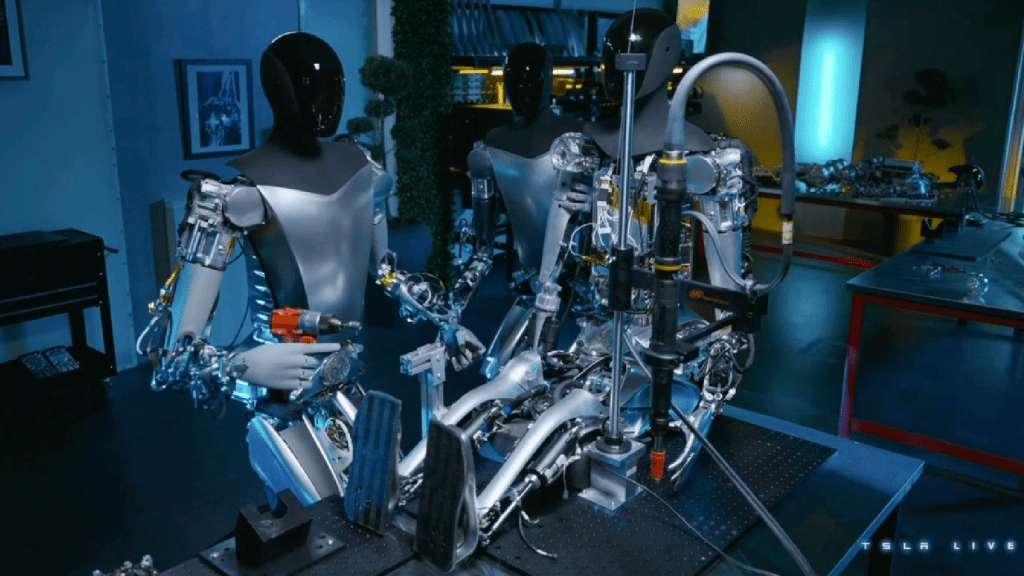
The figure shows the potential capabilities of the humanoid bot including walking, using tools, moving heavy objects, and building itself.
- The same AI that drives the vehicle fleet can operate Optimus
- Huge lead in solving real world AI, not to mention humanoid labor
- Tesla is aiming for a 1:1 ratio of humans to bots (>8 billion bots)
- The Optimus bot could very well be Tesla’s most valuable product, yet least understood by the general population
Charging Innovations
- ~9TWh of charging provided in 2022
- 10 years of charging data and improvement
- Costs per kWh down ~40% since 2020
- 30% decline in supercharging time
- A fully electrified fleet will need ~9PWh of charging annually
- >50% of European chargers are open to 3rd party charging, U.S. chargers on the way (slow policy)

The figure describes the cost-effectiveness of Tesla charging relative to competitors in various places around the world.

Here we can see the cost decline in Tesla charging costs over time.

Likewise, this figure illustrates the declining charging time over time.
Supply Chain Innovations
- Extreme data allows for predictive supply chain tools, handling supply chain issues before they form allowing insane agility
- Thousands of components in each product create an extremely challenging supply chain environment

A description of vehicle scale over the last four years

Automation is fueling the scale in production
Manufacturing Innovations
- 4 factories, 65,000 manufacturing employees, ~2M existing annual capacity
- In-house construction team with full design, engineering, construction, and site management control. Responsible for building all of the new factories.
- 4M total Tesla vehicles. The first 1M vehicles took 12 years, the second took 18 months, the third took 11 months, the fourth took <7 months
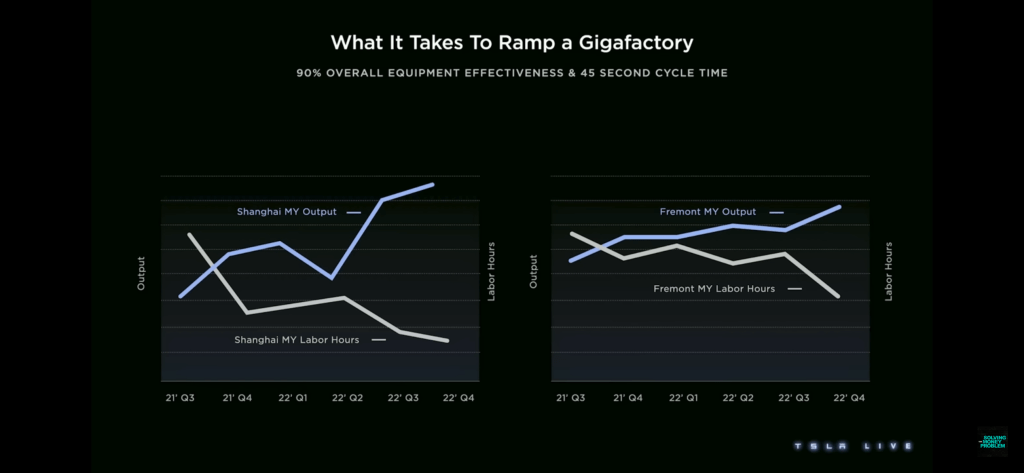
This figure describes the increase in output and decrease in labor for both Shanghai (left) and Fremont (right) gigafactories
Energy Innovations
- Megapack XL is the largest possible object that can be legally transported in a singular vehicle on roads
- 65% compound annual growth rate since 2015
- 300MWh/acre of storage
- Autobidder battery software can effectively day trade energy prices (storing during low price, selling during high price)
- Texas residents are offered $30/month unlimited home charging
- 100GW/year Megapack demand in 2023 and growing
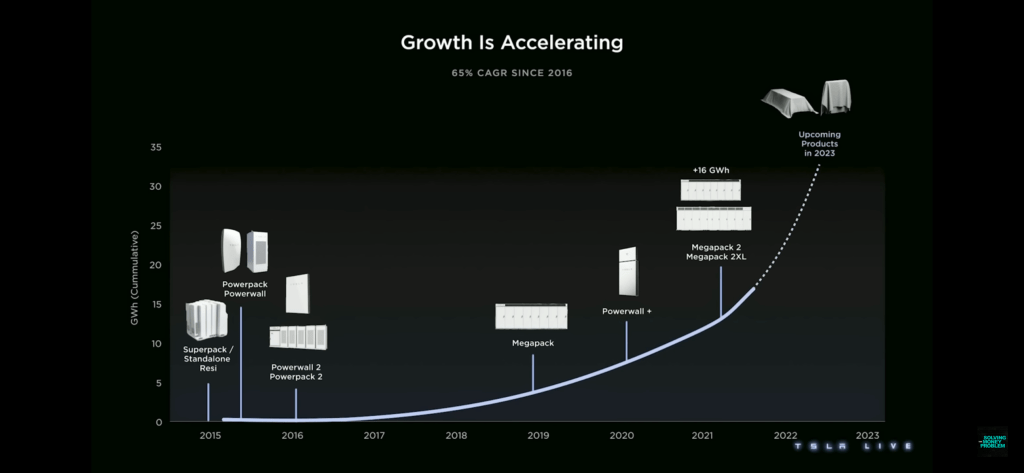
A description and projection of energy storage over time
Cost Innovation
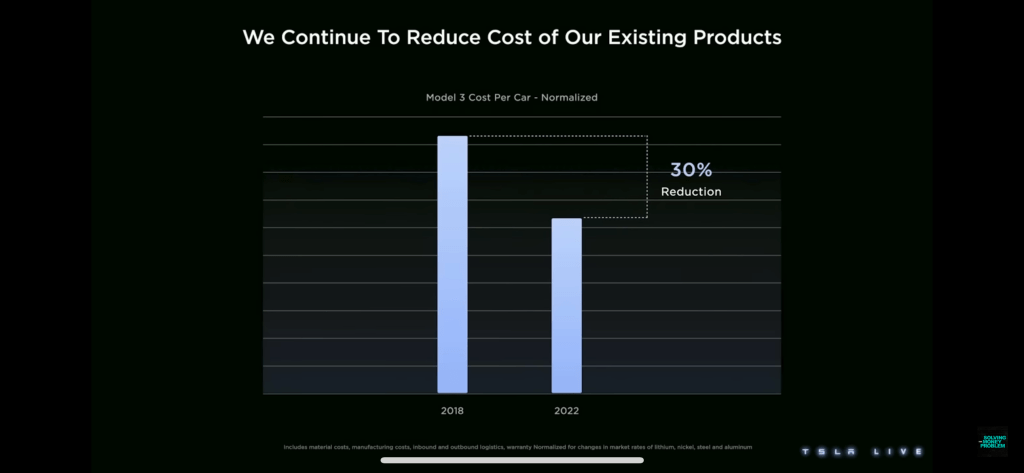
Tesla’s Model 3 has gotten 30% cheaper over time
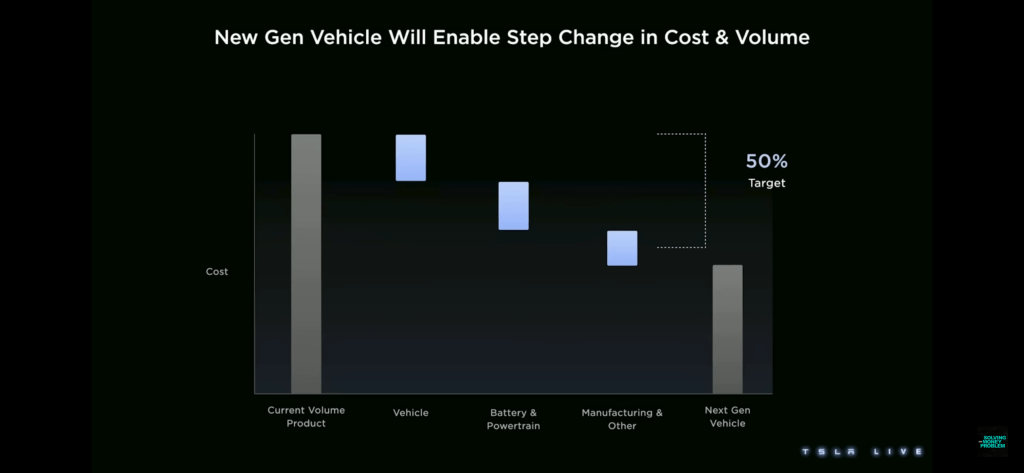
Next-Gen vehicle will be ~50% cheaper than current Model 3 Prices
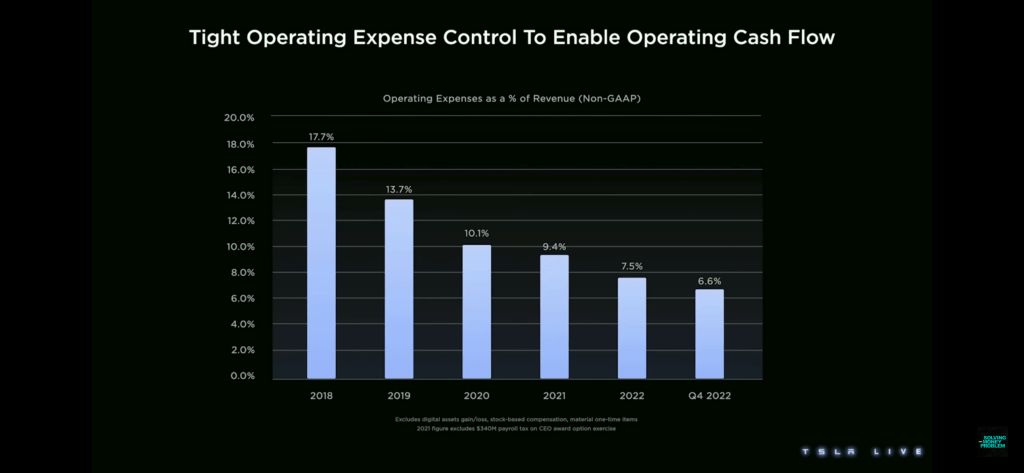
Despite insane scaling, operation expenditure has decreased exponentially over time, enabling insane cash flow
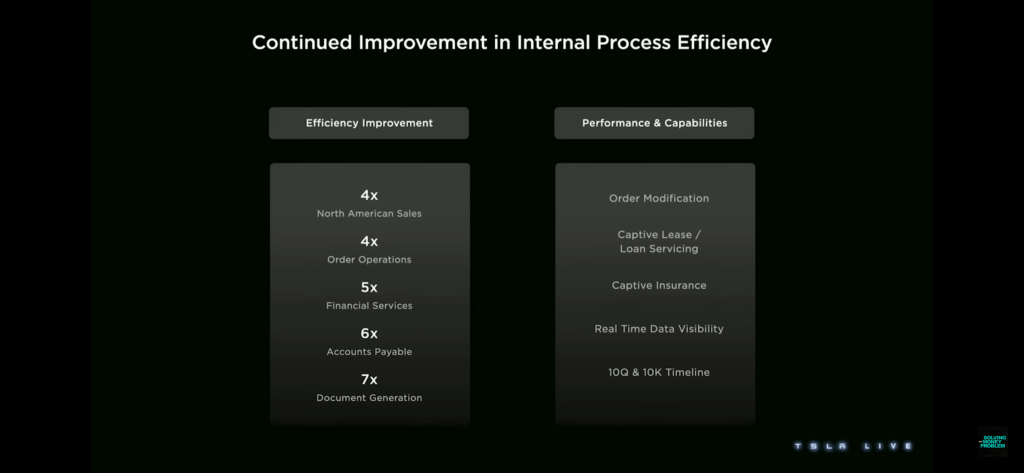
Efficiency gains, all across the board
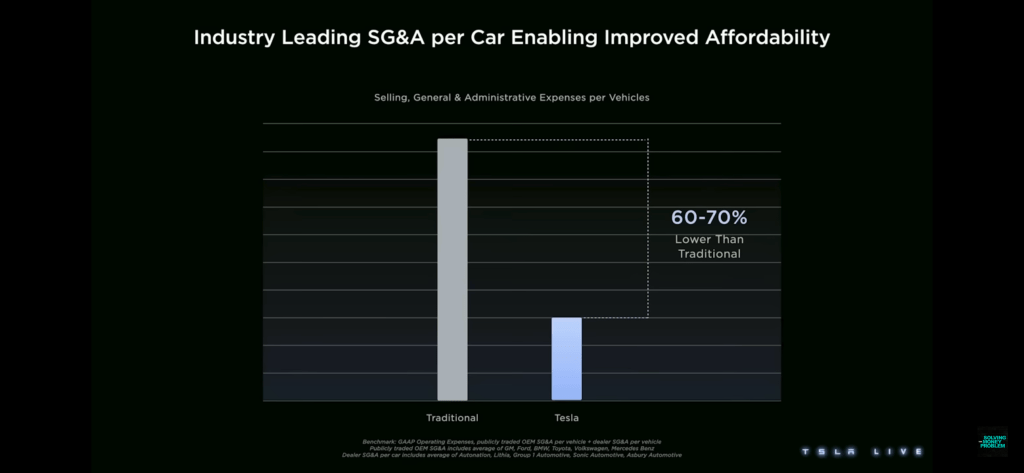
~65% lower cost per vehicle than any traditional auto maker

Current and planned investments, proportional to cash flow
Conclusions
For every reason stated above, Tesla is leading Earth to a sustainable future. Because of the dedication and innovation at Tesla, we can be excited about a future of abundance and prosperity. I hope these notes have given you hope and optimism for the future. A huge shoutout goes to Steven Mark Ryan and his channel Solving The Money Problem. Check out his channel for everything Tesla, you will not be disappointed.
 Thoughts of Jude